 New Creative
 Best Sellers
 Shop The Look
 New Room
 Sofas & Seating Systems
 Coffee Tables & Side Tables
 Tables
 Chairs
 Beds
Beds
 Nightstands & Vanities
 Sideboards & Bookcases
 Console
 Living Room
 Dining Room
 Bedroom
 Office




 About Us
 Sustainability
 Above Still Water: A Bed as the Final Place of Return
 A Place to Pause in Motion: How a Sofa Grounds a Growing Space
 Within the Circle: A Round Dining Table for Everyday Life





Within the Garden: A Dining Table for City Living
Introduction
When a home is no longer designed to impress, but to respond to everyday life, the focus of the space often shifts quietly.

In this private residence in a southern Chinese city, the design does not begin with the living room or the bedroom. Instead, it grows outward from an inward-facing garden, allowing daily life to unfold at a calmer pace.

Within this spatial logic, the dining table is more than a place to eat.

It becomes a point where life truly happens—catching the light from the garden and holding the most relaxed, frequent moments shared between people.

Living Area | A Pause Before the Table
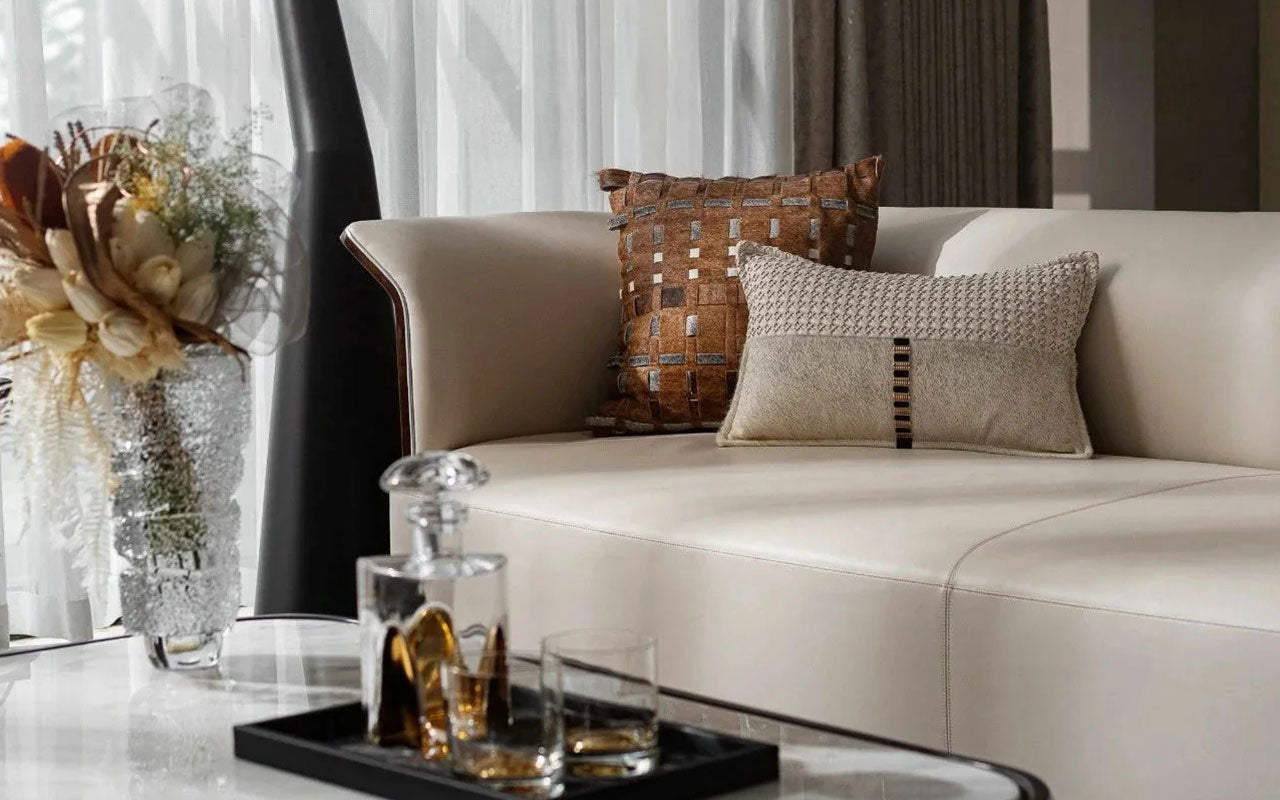
The public spaces are defined by a restrained, light-toned palette, where natural light becomes the main decorative element.

Rather than acting as the sole center of the home, the living area functions as a transitional space—a place to pause before moving toward the dining table.

After reading, chatting, or taking a short rest, people are naturally drawn toward the dining area. This layout avoids rigid functional boundaries, allowing the dining table to enter daily life mentally, long before mealtime begins.

The table suggests gathering—even before anyone sits down.

Dining Area | Where Life Truly Unfolds
Positioned between the living room and the kitchen, the dining table sits at the crossroads of the home’s circulation.

There is no deliberate sense of ceremony here. Instead, the table blends into the space with a calm and grounded presence.

Natural materials define its character:
a warm surface, a clear structure, clean lines, and no unnecessary decoration.
The focus is on texture, weight, and honesty of material.

This makes the table suitable not only for daily meals, but also for lingering—having tea, working, talking, or simply sitting quietly.
It does not demand attention, yet through constant use, it becomes the most important piece in the home.

Guest Area | Conversations That Begin at the Table
Rather than a formal reception room, conversations in this home happen naturally across different spaces.

When guests arrive, gatherings often begin at the dining table—with tea or a simple meal that brings people closer together.

Here, the table plays an equal role.
There is no host seat, no hierarchy—just people sitting together.

Compared to traditional living-room seating, this way of gathering feels closer to how people truly connect in everyday life.

Bedroom | A Gentle Shift in Rhythm
As one moves into the private areas, the pace slows and functions become more focused.

The bedroom no longer needs to support social interaction, because the dining table has already absorbed the energy of the day.
When shared spaces are generous and open, private spaces can return to rest and quiet.
This transition—from day to night—is completed naturally through the presence of the dining table.
Conclusion
A good dining table does more than serve meals.
It acts as a point of balance—
a place where people come together, and where time can slow down.
In this garden-centered home, the table uses simple materials, a stable structure, and an open position to gently pull life away from the rush of the city and back into everyday living.
When a dining table becomes a place that is used again and again, rather than just a piece of furniture,
that is when a home truly begins to grow.
Design Team | OUTIN. DESIGN
If you believe this content infringes your rights, please contact us for removal.