 New Creative
 Best Sellers
 Shop The Look
 New Room
 Sofas & Seating Systems
 Coffee Tables & Side Tables
 Tables
 Chairs
 Beds
Beds
 Nightstands & Vanities
 Sideboards & Bookcases
 Console
 Living Room
 Dining Room
 Bedroom
 Office




 About Us
 Sustainability
 Above Still Water: A Bed as the Final Place of Return
 A Place to Pause in Motion: How a Sofa Grounds a Growing Space
 Within the Circle: A Round Dining Table for Everyday Life





A Place to Pause in Motion: How a Sofa Grounds a Growing Space
Introduction
When walls no longer define boundaries,
when light, sightlines, and movement are fully released,
a home can no longer rely on enclosure to create order.
It needs new points of support.

In this residence, designed around the idea of breaking boundaries, the layout allows daily life to move freely between functions.

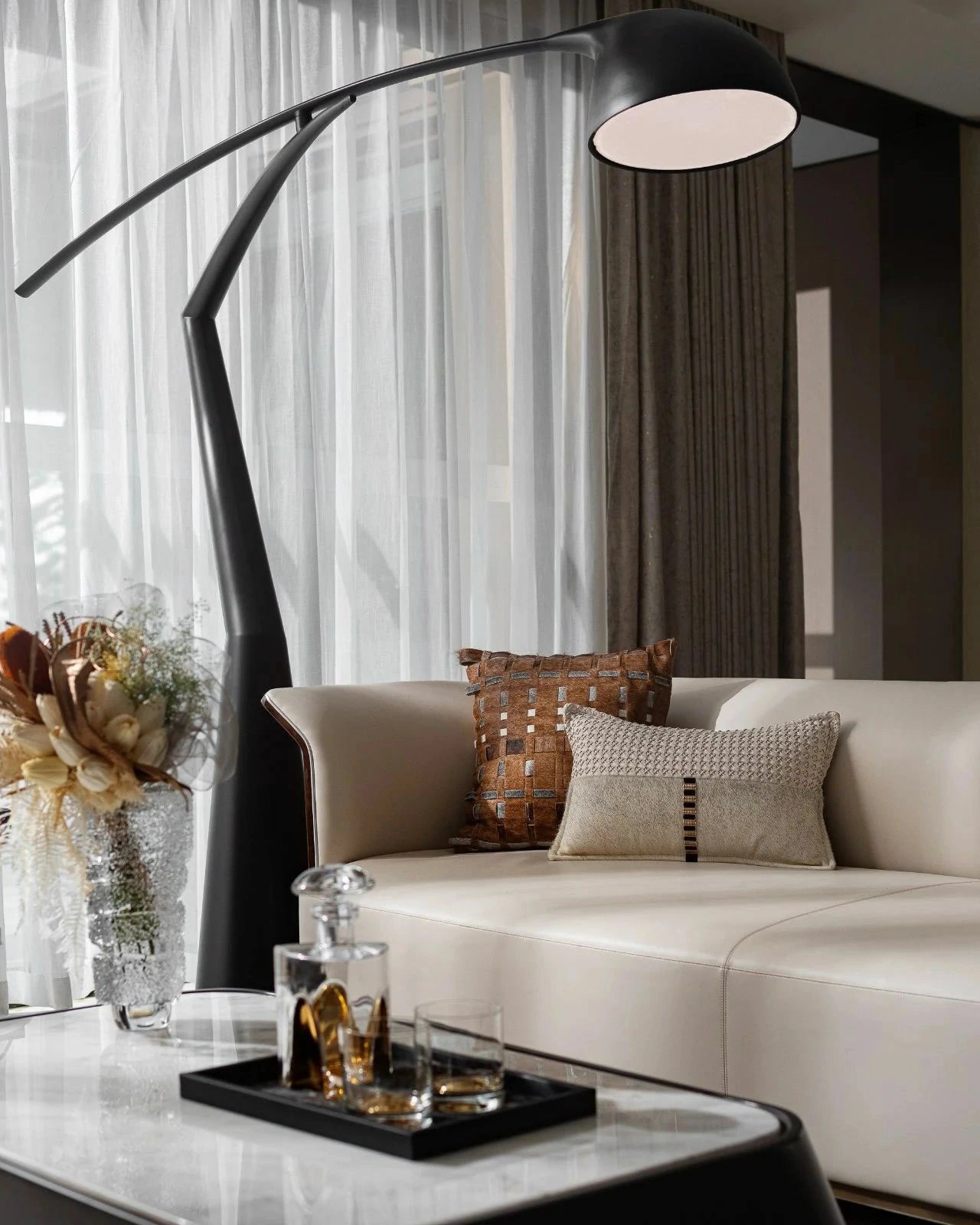
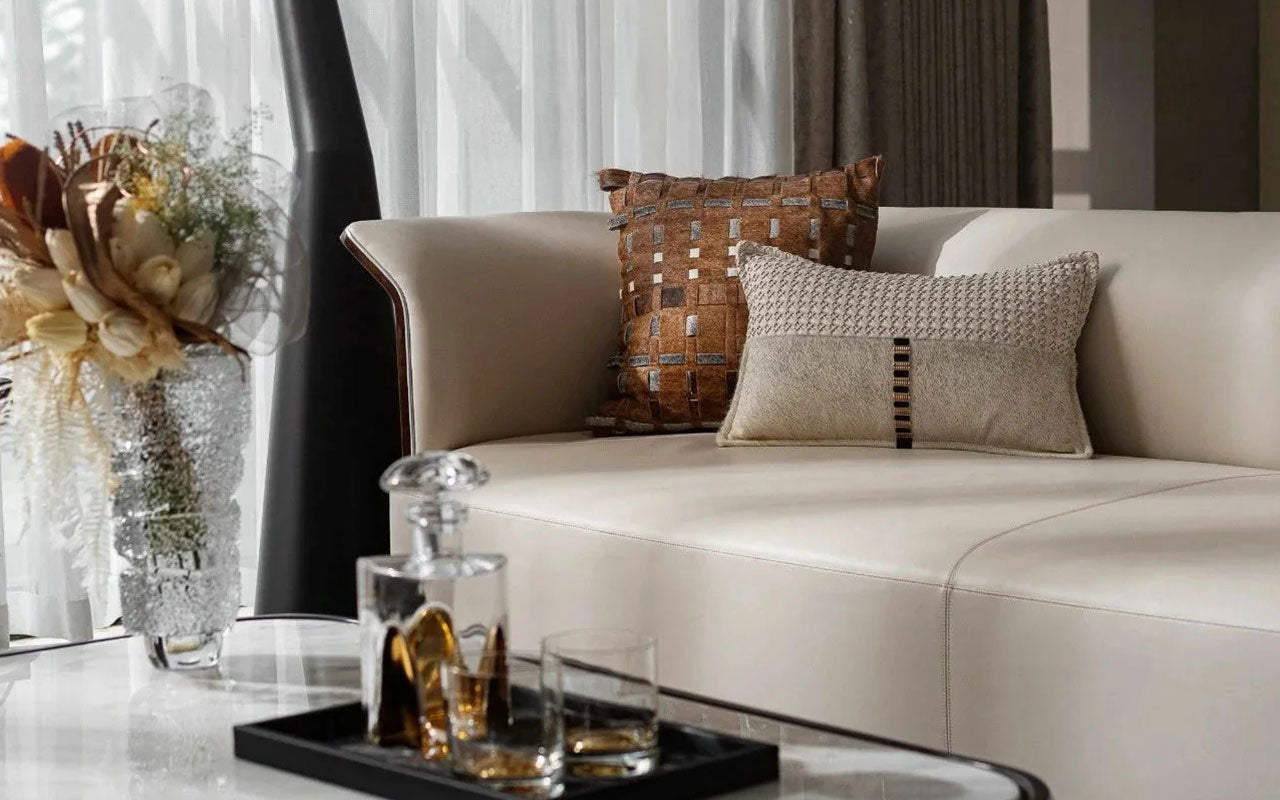
Within this open structure, a sofa from our living room sofas and seating placed at the heart of the public area becomes one of the few elements that invites people to stay.
It is not meant to define a zone, but to catch the flow.

Living Room | A Sofa That Gives Movement a Place to Land
The living room is not treated as a dominant scene.

With a restrained palette of black, white, and grey, the space feels more like an open stage than a composed image.

A dark-toned sofa enters the room with a low, grounded presence.
Its volume is understated, yet its horizontal proportions create visual stability.

Designed with a modular structure, the sofa features clean lines and softened edges. The matte fabric is refined and tactile—comfortable without being overly plush, allowing the body to sink while maintaining support.

As light shifts through the blinds and across the floor, the sofa remains the one element that does not move with time.
It offers a moment of rest within an ever-changing space.

Dining Area | Rhythm Continuing Beyond the Sofa
There is no clear boundary between the dining area and the living room.

Transitions happen through behavior rather than physical divisions.
Moving from the dining table back to the sofa does not feel like entering a different zone.

While the sofa does not participate in dining, it quietly regulates the pace of the shared space—allowing conversations to continue beyond the table and emotions to linger.
In a home that avoids strict zoning,
the sofa becomes the clearest marker of everyday life.

Guest Area | The Sofa as a Buffer for Relationships
When the space shifts into a setting for hosting guests, the sofa’s role becomes even more apparent.

It avoids a formal seating arrangement. Instead, its width and depth encourage the body to relax.

The modular configuration allows for both face-to-face conversations and casual side-by-side seating.

This non-prescriptive layout makes interaction feel natural rather than staged.
Here, the sofa is not the center of conversation, but the condition that allows conversation to happen at all.

Bedroom | From a Shared Anchor to Private Order
Upon entering the bedroom, the space becomes more contained and focused.

Functions are clear, emotions simplified.

Although the sofa is no longer present, the logic of “anchoring” established in the public areas has already done its work. When daily life is properly held outside, the private rooms no longer need to absorb excess emotional weight.

The bed and wardrobe area serve rest alone, rather than acting as a retreat from reality.

Conclusion
A good sofa does not need to dominate a space — the same idea runs through how one sofa holds the gentle rhythm of family life.

In this home shaped by the idea of growth and flow, it acts more like a buffer—
between movement and pause, openness and stability.

Through restrained design, solid structure, and generous proportions, the dark sofa grounds an otherwise fluid environment, offering a place where life can momentarily settle. Inquire about made-to-order sizing and lead times if you want a similar piece.

When furniture no longer defines boundaries,
yet still gives people a reason to stop,
a home begins to truly grow.
Design Team | Xi Yan Design
If you believe this content infringes your rights, please contact us for removal.